Steven F. Udvar-Hazy Center in Washington
Steven F. Udvar-Hazy Center in Washington
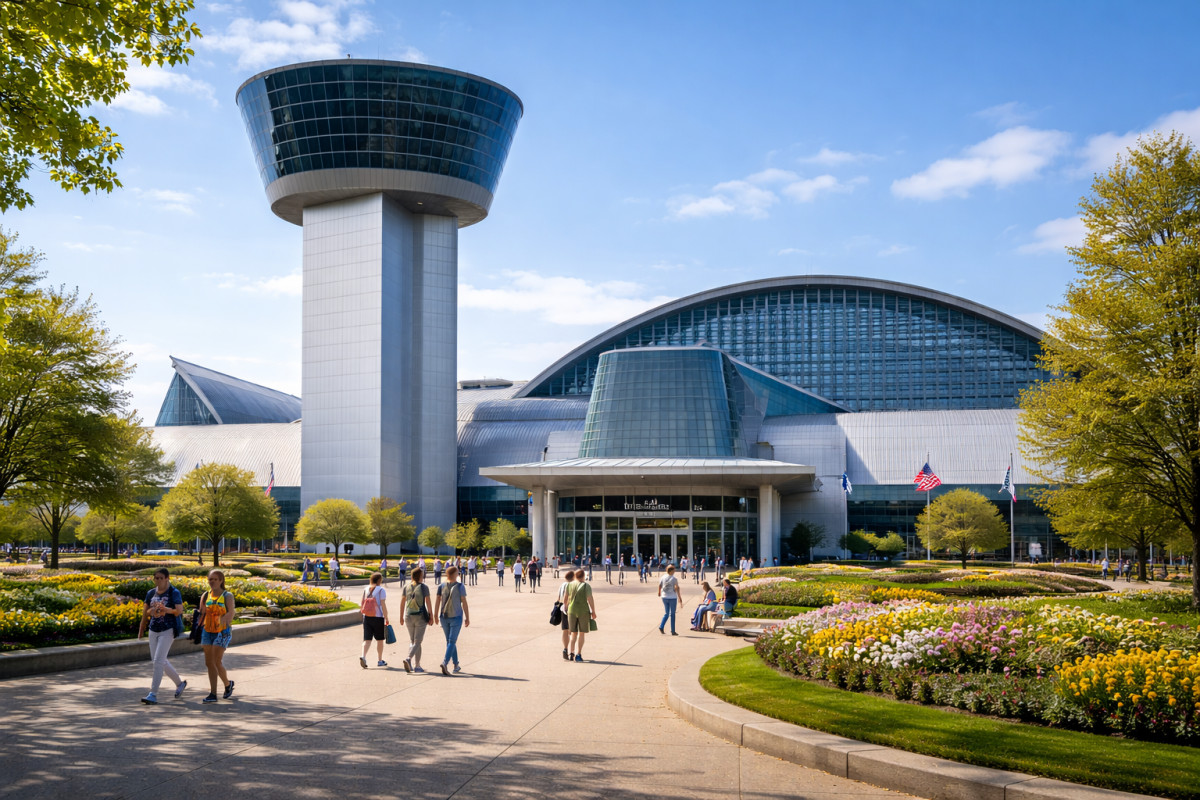
Exploring the magnificent aerospace collection
The Steven F. Udvar-Hazy Center, an expansive annex of the Smithsonian's National Air and Space Museum, presents an unparalleled panorama of aviation and space exploration history. Located in Chantilly, Virginia, near Washington Dulles International Airport, this colossal facility serves as a grand repository for thousands of aviation and space artifacts, many of which are too large to display at the museum's downtown Washington, D.C. location. Its two enormous hangars, the Boeing Aviation Hangar and the James S. McDonnell Space Hangar, house an astonishing array of iconic machines that have shaped humanity's quest to conquer the skies and venture into the cosmos.
The sheer scale of the Udvar-Hazy Center is breathtaking. Visitors are immediately struck by the vastness of the exhibition space, allowing for an unobstructed view of historical aircraft suspended from the ceiling or meticulously positioned on the ground. Unlike traditional museums where artifacts are often confined, here, the open layout provides a unique perspective, enabling guests to appreciate the true dimensions and engineering marvels of these machines from multiple angles. It’s an immersive experience that transports one through pivotal moments in flight and space exploration, from the earliest biplanes to supersonic jets and mighty spacecraft.
Iconic aircraft and their legacies
Among the most compelling attractions is the Space Shuttle Discovery, a veteran of 39 missions and a cornerstone of America's space transport fleet. Its impressive form, complete with char marks from re-entry, stands as a testament to the thousands of hours spent orbiting Earth and its critical role in building the International Space Station. Standing beneath Discovery, one can truly grasp the magnitude of human ingenuity and courage it represents.
Another profound exhibit is the Enola Gay, the B-29 Superfortress that forever altered the course of history. Its presence in the Boeing Aviation Hangar offers a stark and important reminder of a pivotal moment in global conflict and technological advancement. Visitors can observe the immense size of this aircraft, contemplating its complex legacy. Adjacent to it, other significant military aircraft from various eras illustrate the evolution of aerial warfare and reconnaissance.
The Udvar-Hazy Center isn't just a collection of machines; it's a profound narrative of human ambition, innovation, and the relentless pursuit of the unknown.
The center also boasts an impressive lineup of record-breaking and unique aircraft. The SR-71 Blackbird, an unmatched spy plane known for its incredible speed and altitude capabilities, captivates with its sleek, ominous design. Nearby, the majestic Concorde, a symbol of supersonic passenger travel, showcases a bygone era of luxury and speed in commercial aviation. Other notable aircraft include the diminutive but crucial Fw 190, a powerful World War II German fighter; the Lockheed P-38 Lightning with its distinctive twin-boom design; and numerous experimental aircraft that pushed the boundaries of aeronautical engineering. Each exhibit is accompanied by detailed explanations, enriching the visitor's understanding of its historical context and technological significance.
Space exploration at its finest
The James S. McDonnell Space Hangar is a realm dedicated to humanity's journey beyond Earth's atmosphere. The Space Shuttle Discovery is undoubtedly the star, but it is complemented by an array of artifacts that chart the progression of spaceflight. From early rockets and satellites to components of the International Space Station and Mercury and Gemini capsules, the exhibits cover the full spectrum of space exploration. Visitors can marvel at the resilience of the Apollo command module, a tiny vessel that carried astronauts through the vastness of space and safely back home, highlighting the incredible risks and triumphs of the early space race.
This hangar provides a deep dive into the engineering and human aspects of space travel. Displays explain orbital mechanics, propulsion systems, and the harsh realities of living and working in zero gravity. The artifacts here serve not just as historical objects but as tangible links to the extraordinary individuals who dared to venture into the cosmos. Interactive exhibits and informative panels make complex scientific concepts accessible to all ages, inspiring a new generation of scientists and explorers.
Beyond the main hangars
While the aircraft and spacecraft are the main draw, the Udvar-Hazy Center offers more to explore. The Paul E. Garber Restoration Facility, viewable from an elevated observation path, provides a unique glimpse into the intricate work of preserving and restoring artifacts that are not yet on public display. Here, skilled technicians meticulously bring damaged aircraft and spacecraft back to their former glory, ensuring their longevity for future generations. It’s a fascinating behind-the-scenes look at the museum's commitment to heritage.
For an elevated perspective, visitors can ascend the Donald D. Engen Observation Tower. From its panoramic deck, one can watch aircraft take off and land at Washington Dulles International Airport, experiencing the real-time dynamics of modern aviation. The tower also offers sweeping views of the surrounding landscape, providing a sense of place for this grand institution. Additionally, the museum houses an IMAX Theater, offering immersive cinematic experiences related to aviation and space, along with a well-stocked museum store and several dining options.
Planning a group excursion to this awe-inspiring venue? For seamless and comfortable transportation, consider a private charter. A dedicated vehicle ensures your group travels together, on your schedule, making the journey as memorable as the destination itself. Discover reliable options for your next group adventure: Bus Rental.
Practical visitor information
To fully appreciate the vastness and detail of the Steven F. Udvar-Hazy Center, careful planning is key. Its immense size means that allocating sufficient time is crucial; a minimum of 3-4 hours is recommended, though aviation enthusiasts could easily spend an entire day.
Navigating the center
The center is logically divided into two primary exhibition spaces: the Boeing Aviation Hangar and the James S. McDonnell Space Hangar. Upon entering, visitors typically find themselves in the central concourse, with the Aviation Hangar stretching to one side and the Space Hangar to the other. Maps are readily available, and clear signage guides guests through the various sections. It's often beneficial to start with one hangar, explore it thoroughly, and then move to the next. Don't miss the elevated walkways in both hangars, which offer unique overhead perspectives of the exhibits, revealing details not visible from the ground floor. The layout is designed to be accessible, with wide pathways accommodating strollers and wheelchairs.
Accessibility and amenities
The Udvar-Hazy Center is designed to be inclusive and comfortable for all guests. The entire facility is wheelchair and stroller accessible, with elevators and ramps connecting different levels. Restrooms are conveniently located throughout the museum. Several dining options are available, from a cafeteria-style food court to smaller snack kiosks, ensuring visitors can refuel without having to leave the premises. The museum store offers a wide range of aviation and space-themed merchandise, from educational toys to collector's items, perfect for souvenirs or gifts.
Getting there from downtown Washington D.C.
Reaching the Steven F. Udvar-Hazy Center from downtown Washington D.C. requires a bit of travel, as it is located in Chantilly, Virginia, approximately 25-30 miles west of the city center.
By Car or Ride-sharing Service
This is often the most straightforward method. The journey typically takes 45-60 minutes, depending on traffic. Take I-66 West to Exit 67 (Dulles Airport/Route 267 North – Dulles Toll Road). Continue on Route 267 to Exit 9A (Route 28 South – Sully Road). Follow Route 28 South for about three miles and exit at Air and Space Museum Parkway. Parking is available on-site for a fee, generally around $15 per vehicle, allowing re-entry throughout the day.
By Public Transportation (Metro and Bus)
While possible, this option requires more planning due to transfers.
Metro Silver Line to Innovation Center or Dulles Airport Station
From downtown D.C., take the Metro Silver Line towards Ashburn. Exit at either Innovation Center Metro Station or Dulles International Airport Metro Station. From Innovation Center, you can connect to the Fairfax Connector Route 983 bus. This bus runs directly to the Udvar-Hazy Center. Ensure you check the Fairfax Connector schedule as frequency can vary, especially on weekends and holidays. The bus ride from Innovation Center is approximately 15-20 minutes. From Dulles Airport, taxis or ride-shares are also an option for the short remaining distance to the museum.
Combined Bus Service (less frequent)
Some tour operators or specialized public buses occasionally offer direct service from downtown D.C., specifically from the National Air and Space Museum on the National Mall. However, these services are often limited, expensive, or require advance booking, and are not a standard public transit option. Always verify schedules and availability directly with the service provider.
For groups traveling together, coordinating a private bus rental can offer unparalleled convenience and comfort, eliminating the complexities of public transit transfers and parking fees for multiple vehicles. It ensures a relaxed and efficient journey to and from the center.