Freshkills Park in Staten Island, New York City
Freshkills Park in Staten Island, New York City
A colossal metamorphosis
Freshkills Park on Staten Island stands as a monumental testament to ecological ambition, a landscape in the process of an extraordinary rebirth. What was once the world's largest landfill is meticulously being sculpted into a vibrant, multi-faceted urban park, a profound redefinition of urban ecology within New York City. This sprawling expanse, larger than Central Park, is not merely a cover-up but a deliberate, intricate act of creation, transforming a legacy of waste into an expansive public resource.
The very ground beneath one's feet tells a story of profound change, a carefully engineered cap holding the past at bay while above, a new future unfurls. The park's distinct topography, shaped by decades of refuse, is now its unique signature, offering dramatic vistas and rolling hills unlike any other park in the metropolis. It’s a place where human ingenuity meets natural resilience, fostering an environment where both can thrive.
A landscape designed for resurrection, breathing new life into forgotten earth.
Every acre of Freshkills Park is an active canvas, where scientists, designers, and community members are collectively writing a new chapter for urban green spaces. It embodies a bold vision, proving that even the most challenging environmental legacies can be overcome through thoughtful planning and unwavering dedication to ecological restoration.
Sculpting new ecologies
The ecological transformation at Freshkills Park is nothing short of miraculous, a symphony of restoration bringing diverse habitats back to life. Grasslands, wetlands, and woodlands are emerging across its vast acreage, each carefully cultivated to support a rich tapestry of flora and fauna. This deliberate re-wilding attracts an impressive array of species, demonstrating nature's remarkable capacity to reclaim and flourish when given the chance.
From refuse to refuge
Birds, in particular, have become a magnificent indicator of the park's success. More than 200 species have been observed within its boundaries, a stark contrast to its previous incarnation. Hawks soar above the nascent grasslands, while various waterfowl nest in the re-established wetlands. The park serves as a crucial stopover and breeding ground for migratory birds, making it an invaluable sanctuary within the dense urban fabric of New York City.
Biodiversity blooms
Beyond avian life, the park supports a growing diversity of mammals, insects, and plant communities. Deer, foxes, and numerous small mammals have established populations, contributing to a robust food web. Native grasses and wildflowers are meticulously planted, not just for aesthetic appeal, but to provide essential forage and habitat, creating a self-sustaining ecosystem. The restoration process considers every layer, from microscopic soil organisms to towering trees, ensuring a holistic approach to ecological health.
Pathways and perspectives
While still undergoing its phased development, Freshkills Park is already beginning to welcome visitors, offering glimpses into its future as a dynamic public amenity. Access points are thoughtfully designed to connect surrounding communities, inviting exploration and engagement with this evolving landscape. The sheer scale of the park promises a range of experiences, from quiet contemplation to active recreation.
Designing for access
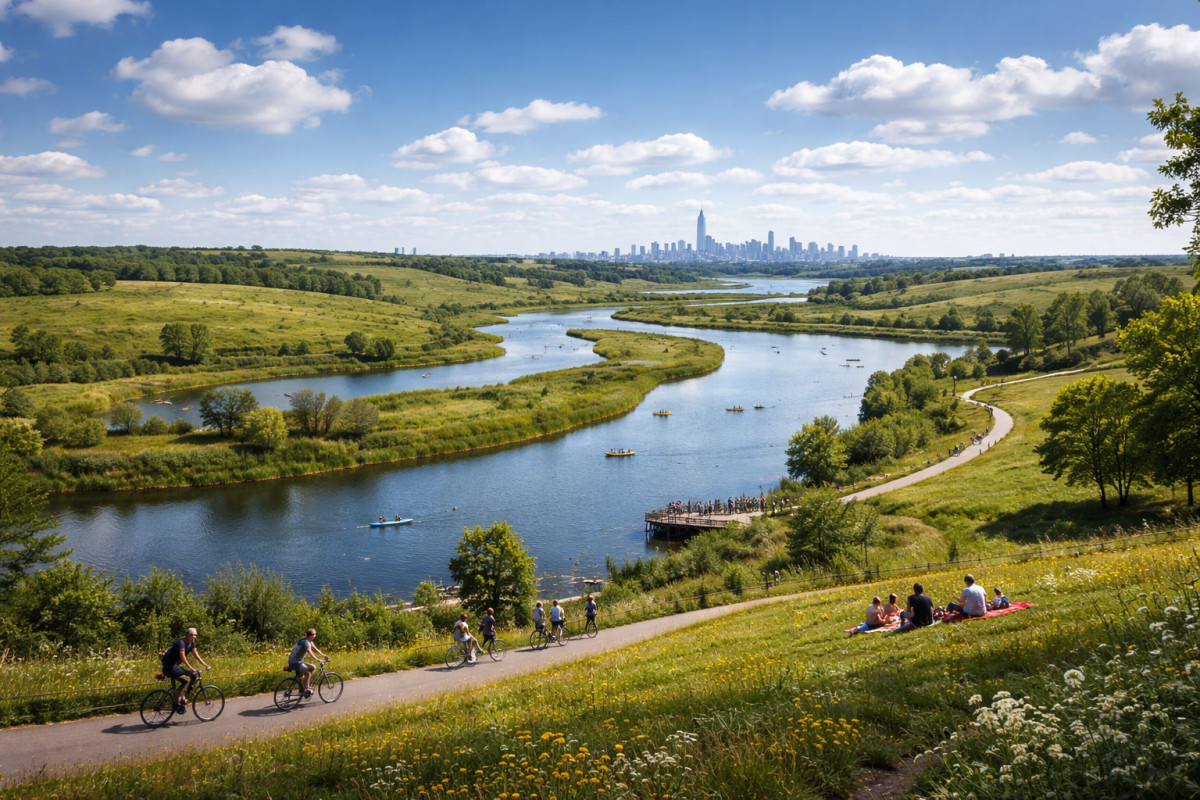
Current and planned pathways weave through different ecological zones, allowing visitors to witness the park's transformation firsthand. These trails provide opportunities for walking, cycling, and observing wildlife in a setting unlike any other urban park. The undulating terrain, a remnant of its past, now offers unique vantage points, providing panoramic views of the park and the distant New York City skyline.
A journey through its paths is a walk through a living experiment, a testament to urban environmental renaissance.
Community engagement
Programming at Freshkills Park focuses on education and stewardship, encouraging local residents to become active participants in its growth. Guided tours, volunteer opportunities, and educational workshops highlight the ecological processes at play and the significance of this ambitious project. It fosters a sense of ownership and connection, ensuring the park becomes a cherished resource for generations to come.
Beyond the green horizon
The vision for Freshkills Park extends far into the future, encompassing decades of ongoing ecological enhancement and public space development. This long-term commitment underscores the profound complexity and enduring nature of such a large-scale reclamation project. It's a continuous process of learning, adapting, and innovating.
Phased development
The park is being developed in distinct phases, each carefully planned to integrate public access with ecological restoration. Future plans include the expansion of recreational facilities, additional trails, and the creation of more diverse habitats. The goal is to gradually open the entire 2,200 acres to the public, transforming the entire site into an accessible, vibrant urban oasis.
Innovative land management
Sophisticated land management techniques are continuously employed to monitor and enhance the park's environmental health. This includes managing stormwater, promoting soil regeneration, and controlling invasive species, all critical components of sustaining a thriving ecosystem on a formerly industrial site. The park serves as a living laboratory for sustainable urban development, offering invaluable lessons for similar projects worldwide.
The living laboratory
Freshkills Park transcends the conventional definition of a park; it is a dynamic scientific research site, a vast open-air laboratory. Its unique history and ongoing transformation provide unparalleled opportunities for ecological study, contributing significantly to our understanding of restoration ecology and urban resilience.
Research and education
Scientists and researchers actively utilize the park to study various phenomena, from soil microbiology and plant succession to bird migration patterns and water quality. This ongoing research directly informs the park's management strategies, ensuring that its development is guided by the latest scientific understanding. The park also hosts educational programs for students of all ages, fostering a deeper appreciation for environmental science and conservation.
Ecological monitoring
Extensive monitoring programs are in place to track the health and progress of the evolving ecosystems. Sensors monitor gas emissions, groundwater quality, and soil conditions, providing crucial data on the landfill cap's performance. Wildlife populations are carefully surveyed, offering insights into the effectiveness of habitat restoration efforts and the overall ecological enrichment of the site.