National Mall in Washington
National Mall in Washington
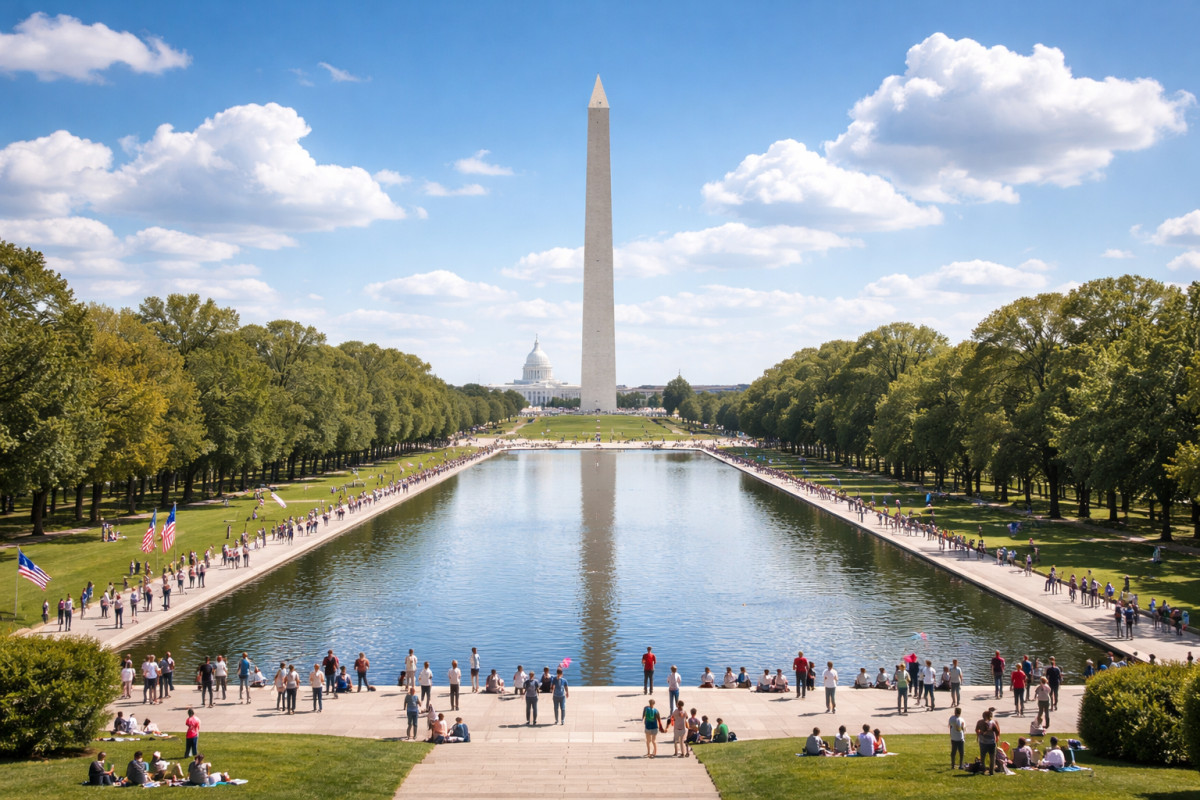
Monuments and enduring tributes
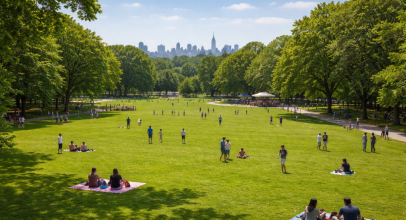
The National Mall, a vast expanse of green stretching from the U.S. Capitol to the Lincoln Memorial, serves as a monumental civic stage, encapsulating significant moments and figures from American history. This iconic landscape is not merely a park but a meticulously designed canvas displaying profound tributes and vital narratives. Each structure, from the towering obelisk to the contemplative walls, invites visitors into a dialogue with the nation’s past and its aspirations.
The stoic grandeur of Lincoln
At the westernmost end, the majestic Lincoln Memorial stands as an enduring symbol of unity and perseverance. Its classical Greek temple design, with 36 Doric columns representing the states in the Union at the time of Lincoln's death, evokes a timeless reverence. Inside, the colossal marble statue of Abraham Lincoln gazes thoughtfully across the Reflecting Pool, an expanse of water that mirrors the Washington Monument and the distant Capitol. The profound silence within its walls, broken only by the hushed whispers of visitors, amplifies the weight of Lincoln’s legacy and his impassioned pleas for equality and freedom. The view from its steps, particularly at dawn or dusk, offers an unparalleled panoramic sweep of the Mall, a vista that has inspired countless gatherings and historic speeches.
Washington's towering obelisk
Dominating the central axis of the Mall, the Washington Monument soars into the sky, a magnificent obelisk crafted from marble, granite, and bluestone gneiss. It stands as a testament to the nation’s first president, George Washington, and his foundational role. Its sheer scale and elegant simplicity make it an unmistakable landmark, visible from nearly every point on the Mall. While access to its interior observation deck is highly sought after, its exterior presence alone is a powerful reminder of leadership and national origin. It serves as a visual anchor, perfectly positioned between the Lincoln Memorial and the U.S. Capitol, conceptually linking the beginning of the republic with its enduring institutions.
Reflecting on global conflicts
Adjacent to the Reflecting Pool, the World War II Memorial offers a powerful and moving tribute to the 16 million Americans who served, 400,000 of whom died, and all who supported the war effort from the home front. This grand plaza, featuring 56 pillars representing U.S. states and territories, two triumphal arches, and a Freedom Wall adorned with 4,048 gold stars, evokes a sense of collective sacrifice and unity. The sheer expanse of the memorial allows for both quiet contemplation and a sense of shared experience, embodying the enormous scale of a global conflict and the widespread impact on American families. Just a short walk away, the Vietnam Veterans Memorial presents a stark contrast with its minimalist yet deeply affecting design. The polished black granite walls, etched with the names of over 58,000 service members who died or went missing, create a profound space for personal reflection and remembrance. The reflective surface of the wall merges the image of visitors with the names, fostering an intimate connection between past and present. Nearby, the Three Soldiers statue and the Vietnam Women's Memorial provide additional layers of representation, honoring the diverse roles and sacrifices made during that tumultuous era. The Korean War Veterans Memorial further along the Mall uniquely captures the human element of conflict. Nineteen stainless steel statues, representing a patrol squad, are depicted moving through a field of juniper bushes, their faces etched with a blend of determination and weariness. A polished granite Wall of Remembrance mirrors their images and depicts photographic etchings of servicemen and women, creating a powerful, almost spectral, presence. The pool of remembrance offers a serene space for contemplation, completing a tribute to a conflict often called "The Forgotten War."
Spaces of profound contemplation
Beyond the grand memorials to presidents and wars, the National Mall provides spaces dedicated to the pursuit of justice, equality, and philosophical ideals. These sites offer unique opportunities for visitors to engage with the principles that continue to shape American society.
Martin Luther King, Jr.'s dream embodied
The Martin Luther King, Jr. Memorial, situated in the southwest corner of the Mall, stands as a testament to the civil rights leader's enduring legacy. Its centerpiece, the "Stone of Hope," emerges from the "Mountain of Despair," illustrating King's vision of progress from struggle. Engravings of profound quotes from his speeches and writings are etched into the memorial’s walls, inviting visitors to ponder his powerful message of peace, justice, and nonviolence. The memorial's design and placement, looking out towards the Tidal Basin and within sight of the Lincoln Memorial where King delivered his iconic "I Have a Dream" speech, forge a direct connection to the historical and ideological landscape of the Mall. It is a powerful reminder of the ongoing journey towards equality.
Jefferson's timeless wisdom
Nestled on the shore of the Tidal Basin, framed by a picturesque grove of Japanese cherry trees that burst into bloom each spring, the Thomas Jefferson Memorial is a neoclassical rotunda. Inspired by the Pantheon in Rome, its open-air design offers expansive views across the water towards the White House. A towering bronze statue of Jefferson stands central, surrounded by passages from the Declaration of Independence and other writings that underscore his commitment to liberty, education, and the separation of church and state. The memorial’s serene setting encourages quiet reflection on the philosophical underpinnings of American democracy.
The National Mall is a living museum, where every step on its hallowed ground resonates with the echoes of history, protest, and the relentless pursuit of a more perfect union. It’s a dynamic space, constantly inviting new interpretations of freedom and justice.
A nexus of knowledge and discovery
A significant portion of the National Mall is dedicated to the pursuit of knowledge and the celebration of human achievement, anchored by the unparalleled Smithsonian Institution. This cluster of world-class museums offers an extraordinary journey through art, science, history, and culture, all largely free to the public.
The unparalleled Smithsonian sphere
The Smithsonian museums along the National Mall collectively represent the world's largest museum complex. These institutions are not just repositories of artifacts but vibrant centers of research and education, designed to inspire curiosity and critical thinking across all ages. From ancient civilizations to the frontiers of space, the Smithsonian offers an educational odyssey unlike any other. Planning your visit to these extensive collections might require multiple days, or a focused selection based on specific interests. For groups planning an extensive tour of Washington DC’s unparalleled attractions, consider the convenience and comfort of professional transportation. Exploring the vastness of the National Mall and its surrounding sites is significantly enhanced when logistics are seamlessly managed. You can easily arrange for a dedicated vehicle to transport your party, ensuring a smooth and efficient experience across all points of interest. Discover flexible and reliable options for your journey here: Bus Rental.
Natural history's grand narrative
The National Museum of Natural History captivates visitors with its sprawling exhibits covering everything from dinosaur skeletons and ancient human ancestors to exotic gems and marine life. Its iconic elephant in the rotunda greets millions annually, inviting them into a world of scientific discovery. The museum’s Hall of Fossils presents a breathtaking journey through time, showcasing creatures that roamed the Earth millions of years ago, while the Hope Diamond dazzles with its legendary brilliance and mysterious history.
Exploring flight and the cosmos
The National Air and Space Museum is a beacon for enthusiasts of aviation and space exploration. Housing iconic artifacts like the Wright Flyer, Charles Lindbergh's Spirit of St. Louis, the Apollo 11 Command Module, and a piece of moon rock, the museum chronicles humanity's relentless quest to conquer the skies and venture into the cosmos. Interactive exhibits and planetarium shows further immerse visitors in the wonders of aerospace innovation, inspiring dreams of future flight and scientific breakthroughs.
America's story in artifacts
The National Museum of American History provides a comprehensive chronicle of the American experience, from its diverse cultural tapestry to its technological advancements and political milestones. Exhibits range from Dorothy's ruby slippers from "The Wizard of Oz" and the original Star-Spangled Banner to presidential artifacts and exhibitions on social movements. The museum skillfully weaves together individual stories with national narratives, illustrating the multifaceted development of American identity and character.
Artistic masterpieces and global cultures
Further along the Mall, the National Gallery of Art presents a stunning collection spanning from the Middle Ages to the present day, featuring masterpieces by European and American artists. Its East Building, designed by I.M. Pei, showcases modern and contemporary art, while the West Building houses older European and American works. The Sculpture Garden offers an open-air exhibition of modern sculpture, inviting leisurely strolls. The National Museum of the American Indian offers a profound exploration of Native cultures across the Western Hemisphere through engaging exhibits, performances, and culinary experiences. Lastly, the Hirshhorn Museum and Sculpture Garden captivates with its focus on modern and contemporary art, housed within a striking cylindrical building, offering a unique perspective on artistic innovation.
Governmental anchors and symbolic vistas
While not directly part of the walk-through monument experience, the governmental structures flanking the Mall are integral to its identity and symbolic weight. They represent the living, breathing institutions of American democracy.
The Capitol's commanding presence
At the easternmost terminus of the National Mall, the U.S. Capitol Building stands as a majestic symbol of American legislative power. Its iconic dome, visible from afar, houses the legislative branch of the federal government. While tours of the interior provide insight into the nation’s lawmaking process and history, even an exterior view from the Mall offers a powerful sense of its grandeur and significance. The meticulously manicured Capitol Grounds and the adjacent U.S. Botanic Garden provide a serene counterpoint to the building’s imposing architecture, offering a glimpse into horticultural diversity.
The iconic White House views
Though situated just north of the National Mall, the White House remains a profoundly significant landmark visible from various points along the Mall, particularly from the Ellipse and Lafayette Square. As the official residence and principal workplace of the President of the United States, it is a global symbol of American leadership. While public access is limited and requires advance planning through a congressional representative, visitors can admire its stately facade from a distance, reflecting on its historical importance and contemporary role.
Navigating the monumental core
Experiencing the National Mall effectively means understanding how to navigate its vast layout and connect its numerous attractions. While it is a pedestrian-friendly environment, strategic transportation planning enhances the visit.
Getting there from downtown DC
The most convenient and efficient way to reach the National Mall from downtown Washington, D.C., is via the Metrorail system. Several stations are strategically located around the Mall, providing excellent access to different sections. * Smithsonian Station
: This station, serving the Blue, Orange, and Silver Lines, places you directly in front of the Smithsonian National Museum of Natural History and the Smithsonian Castle, offering immediate access to the central part of the Mall. It is ideal for starting your exploration of the museums or heading towards the Washington Monument. * Federal Triangle Station
: Also on the Blue, Orange, and Silver Lines, this station is slightly north of the Mall but still offers easy walking access to the National Museum of American History and the National Gallery of Art. * L'Enfant Plaza Station
: This is a major hub served by the Blue, Orange, Silver, Green, and Yellow Lines. It's located at the southeast end of the Mall, providing access to the National Museum of the American Indian, the Hirshhorn Museum, and within a reasonable walk to the U.S. Capitol. * Capitol South Station
: Servicing the Blue, Orange, and Silver Lines, this station is best for directly reaching the U.S. Capitol Building and the Library of Congress. * Metro Center Station
: While a bit further, this major transfer station (Red, Blue, Orange, Silver Lines) in the heart of downtown DC allows you to easily connect to any of the aforementioned stations. Walking is also a popular and highly recommended method for experiencing the Mall, especially on pleasant days. The entire stretch from the Capitol to the Lincoln Memorial is approximately two miles, making it entirely walkable for many, allowing for spontaneous stops at memorials and museums. Public bus routes also crisscross the area, with numerous stops along the Mall's periphery, offering an alternative for shorter distances or when feet are tired. Additionally, Capital Bikeshare stations are abundant throughout the area, providing an active way to move between attractions, with docking stations conveniently located near most major points of interest. Ride-sharing services are also readily available, offering door-to-door convenience for those preferring direct transport.